
Blaga Dimova
Burgas State University „Prof. Dr. Assen Zlatarov“ (Bulgaria)
https://doi.org/10.53656/ped2026-2s.08
Abstract. The motive for writing this article is the need to focus on the development of green competences in preschool age. Its aim is to stimulate this development in preschool age because of their importance in the context of competence-based education in contemporary society. Conceptually based on the importance and relevance of the European sustainability competence framework, the main tasks are focused on the following: theoretical study of the problem, developing criteria and indicators establishing the level of green competence formation in preschool age; development and implementation of part of an interactive model – a system of activities to stimulate the development of green competences in kindergarten, presentation of relevant results from the study.
Keywords: green competences, preschool age
Introduction
In today’s dynamically developing world, the consumption of non-renewable natural resources is constantly increasing, posing serious challenges to our future normal existence. An immediate change is needed in current production and consumption patterns, in our thinking, in our responsibility towards others, otherwise we risk hindering future generations’ access to vital resources. This trend is leading to a growing demand for specialists with innovative knowledge, skills, and attitudes, known as “green competences”.
Theoretical rationale
The successful implementation of so-called “green education” in the process of pedagogical interaction in kindergarten requires a thorough and, above all, accurate clarification of the basic concepts.
The concept of “green competences” extends far beyond this definition and could be broadly defined as a set of knowledge, skills, and attitudes to support the sustainable development of society. The concept of “green competences” extends far beyond this definition and can be broadly defined as a set of knowledge, skills, and attitudes for the support and sustainable development of a socially, economically, and environmentally responsible society. Green competences should be viewed as a broad set of different competencies, both individual and of individual structures, institutions, enterprises, factories, organizations, etc. in the context of environmental sustainability. These would include the abilities of future citizens to limit harmful emissions, conserve and use natural resources wisely, reduce social inequality at the global and national levels, and adapt to climate change, which is becoming increasingly important.
Other authors, such as G. Avramova-Todorova, compare “green competences” with the ability to understand the impact of human activity on the environment and to make sustainable decisions aimed at minimizing environmental damage (Avramova-Todorova, 2019).
The Council Recommendation on learning for the green transition and sustainable development, published in the Official Journal of the European Union on June 16, 2022, once again clearly confirms the need to expand and intensify actions to “support the green transition and promote learning for sustainable development” within the member states of the European Union. This regulatory document emphasizes the need to integrate sustainable development and the green transition into all stages of education, including providing preschool-age children with the opportunity “to understand, appreciate, and engage with the natural world and its biological diversity, develop a sense of curiosity and wonder, and learn to act individually and collectively to achieve sustainability”1.
Another document that guarantees the successful uniform implementation of educational initiatives in the field of environmental sustainability at European level, serving as a reference tool for assessing their progress, is GreenComp – the European Sustainability Competence Framework. One of the added values of GreenComp is the definition of sustainability as prioritizing “the needs of all life forms and the planet, ensuring that human activity does not exceed the limits of the planet”. Sustainability is made up of four areas of competence, 12 building blocks that could be learned to varying degrees and in different sequences by individuals2.
There is no separate regulatory document in the Bulgarian education system that specifies the actions and measures for developing green competences in pre-school and school education. These include: the Law on Preschool and School Education, Ordinance No. 5 on Preschool Education, Ordinance No. 13 on Civic, Health, Environmental, and Intercultural Education, and the Strategic Framework for Education Development (2021 – 2030). This finding is also made in the comparative report Learning for sustainability in Europe: Building competences and supporting teachers and schools from 2024 by the European education network Eurydice, which emphasizes that in Bulgaria and some other EU countries, the only support measure is “the development of teaching materials, resources, and guidelines”3.
All this necessitates the development and testing of a model focused on the development and stimulation of green competences in preschool age. This publication presents part of this research, focusing on activities for this development.
Methodology
The aim of this study is to stimulate the development of green competences in preschool age. Conceptually based on the importance and relevance of the European sustainability competence framework, the main tasks are aimed at the following:
- to conduct a theoretical study of the problem
- to develop criteria and indicators for establishing the level of green competence formation in preschool age
- to develop and implement part of an interactive model – a system of activities to stimulate the development of green competences in preschool age
- to draw relevant conclusions from the study.
The study is based on the following methods:
- play – this is the main method used in this study, which is simultaneously a framework, form, approach, and tool for preschool education
- theoretical research method
- pedagogical observation method.
Specific predictions for stimulating the development of these competences are possible mainly based on interactivity as a theory and concept for learning, as they reflect the essence of contemporary education. They are at the heart of the learning process, ensuring the connection between participants in education and learning outcomes, enabling “the simultaneous acquisition of knowledge, formation of skills, and development of attitudes” based on experience (Vulchev, 2006, p. 19).
For the purposes of the study and implementation of the model, we focused on the following interactive methods:
- interactive author’s fairy tale,
- case studies,
- projective techniques.
The place of the fairy tale in the process of pedagogical interaction for the formation of a positive attitude towards nature has been proven in the studies of a lot of authors. According to P. Konakchieva and S. Velikova, the fairy tale is preferred by preschool teachers because it establishes itself in the minds of children as a model for ecological behaviour. With their clear structure and accessible plot, they stimulate children’s imagination and form an interest in nature, while at the same time helping to build values related to respect and care for the environment. According to them, the greatest advantage of the fairy tale is its values, which children remember and can use as a rule in their interaction with nature (Konakchieva & Velikova, 2024, p. 948).
Case studies as an interactive method provide an unlimited resource for teachers. In her work, N. Nohria, a lecturer at Harvard Business School, shares the opportunities that case studies offer for developing not only knowledge on a specific topic, but also the implementation of so-called meta-skills such as “preparation, insight, recognition of prejudices, judgment, collaboration, curiosity, and self-confidence”4.
Projective techniques can be particularly valuable when working with children, as they often lack the language skills or confidence to express their feelings directly. Through games, drawings, or stories, children can more easily show what they think and feel without being placed in uncomfortable or stressful situations 5.
As a result of the theoretical study, four necessary and accessible green competences were identified – one from each of the four areas of competence in the European Sustainability Competence Framework – which served as the basis for selecting the criteria and indicators for the presented study. The focus of the activities in the model is on their formation:
– Criterion 1: Promoting nature
Indicator 1.1: Recognizes that humans are part of nature. Demonstrates an understanding of the relationship between humans and nature through statements, actions, and participation in environmental activities. Assessment indicator: Observed/not observed
Indicator 1.2: Respects the needs and rights of other species and nature itself to restore and regenerate healthy and sustainable ecosystems. Actively participates in environmental protection efforts and shows concern for ecological balance. Assessment indicator: Observed/not observed
– Criterion 2: Critical thinking
Indicator 2.1: Analyses arguments, ideas, actions, and scenarios to determine whether they are consistent with evidence and values related to sustainability. Critically evaluates issues related to sustainability and provides reasoned arguments based on evidence. Assessment indicator: Observed/Not observed
– Criterion 3: Futures literacy
Indicator 3.1: Identifies the steps necessary to achieve a preferred sustainable future. Develops an action plan by recognizing key stages for sustainable development and proposing specific solutions. Assessment indicator: Observed/not observed
- Criterion 4: Collective action
Indicator 4.1: Acts for change in collaboration with others. Engages in teamwork, shares ideas, and actively participates in initiatives aimed at positive environmental transformation. Assessment indicator: Observed/not observed (Green Comp., 2022, pp. 14 – 15).
The sample of the study includes 84 children aged 6-7 years from preschool institutions in the city of Burgas. The study was conducted over a period of two months – from April to May. Before and after the application of the model, the children’s achievements were assessed at the initial and final levels through observation, and the results were documented in individual and summary reports based on the observations made.
Due to the specific nature of preschool-aged children, the presence of play in each element was mandatory. Conducting training through play enhances children’s interest in new knowledge (Buzov, 1998, p. 9).
To stimulate the development of green competences in 6-7-year-old children, a system of activities consisting of 11 elements was applied, the development and implementation of which was carefully selected to ensure the formation of all criteria and indicators of the study. Each element was designed to be applied in both basic and additional forms of pedagogical interaction to facilitate the work of pedagogical specialists.
The system of activities consists of the following elements:
– Interactive author’s story “Mission – Save the Earth”
A story about a brave defender of nature who wants to save his disappearing green town – a polluted river, a deforested forest, and a city full of smog. Instead of ready-made solutions, he invites children to choose for themselves how to help. They make decisions, act, and change the world. The story shows that children’s choices are the engine of change.
– Case studies: Are we friends with trees? How to invite bees to lunch; Are there eco-friendly plastic cups? What would our kindergarten look like in 20 years ?; Green patrols.
Each case study is designed according to the following algorithm:
- Identify an indicator
- Create a plot situation
- Incorporate green competencies
- Formulate a choice/question for the child
- Determine an evaluation criterion
– Projective techniques: My place in nature – drawing technique; What would the tree ask us to do – role-playing game; Who would you save? – visual projection; Forest fire – simulation projection; Who will win the green cup? – role-playing game.
The use of projective techniques for developing green competencies is extremely productive, as it develops imagination, stimulates children’s analytical and critical thinking, and allows them to be personally involved in the sustainable development of the planet.
Results and discussion
Over a two-month period, baseline diagnostics were conducted to determine the presence of green competencies, implementation of activities to stimulate and develop green competencies, and baseline level. The data from the study are presented graphically in Figure 1 and Figure 2.
Legend:
1.1 Recognizes that humans are part of nature. Demonstrates an understanding of the relationship between humans and nature through statements, actions, and participation in environmental activities.
1.2. Respects the needs and rights of other species and nature itself to restore and regenerate healthy and sustainable ecosystems. Actively participates in environmental conservation efforts and shows concern for ecological balance.
2.1. Analyses arguments, ideas, actions, and scenarios to determine whether they are consistent with evidence and values related to sustainability. Critically evaluates sustainability issues and provides reasoned arguments based on evidence.
3.1. Identifies the steps needed to achieve a preferred sustainable future. Develops an action plan by recognizing key stages of sustainable development and proposing specific solutions.
4.1. Acts for change in collaboration with others. Engages in teamwork, shares ideas, and actively participates in initiatives aimed at positive environmental transformation.
Before the implementation of activities to stimulate the development of green competences in kindergarten, the analysis of the data from the initial assessment shows that indicator 1.1 is observed in most children (63.1%). Fifty-three children demonstrate awareness that they are part of nature and understand the relationship between humans and the natural environment. Just over half of the children (49 or 53.3%) demonstrate respect for the rights of all living beings and show care for nature by actively participating in initiatives for its preservation and restoration (indicator 1.2). The lowest values are measured for indicator 4.1 – 37 children or 44.1%. Just under half of the children work in a team and demonstrate a willingness to cooperate in activities related to improving the state of the planet. Critical thinking and future literacy in relation to sustainable development are demonstrated by 39 (46.4%) and 41 (48.8%) children respectively – again less than half of the children.
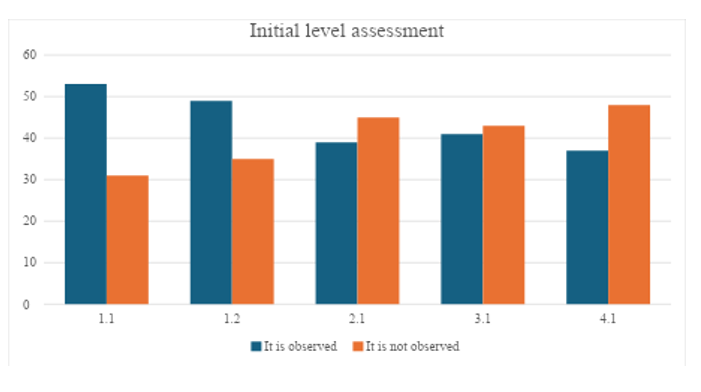
Figure 1. Assessment of the initial level of green competences development
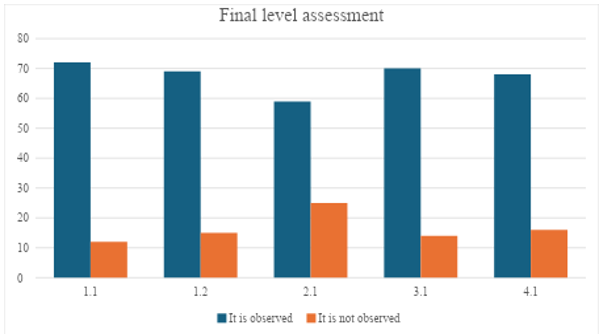
Figure 2. Assessment of the final level of green competences development
The data presented allows us to conclude that the application of a system of activities to stimulate the development of green competences in kindergarten has had a positive impact on the levels of these competences. For greater certainty of this statement, we use the arithmetic mean of all indicators for the entry level – 52.54% and its increase at the exit level by 28.33% – 80.87%, which is proof of this.
Conclusion
Preschool age is a key stage in a child’s life, during which the foundations for lifelong learning are laid and attitudes related to responsibility towards nature and sustainable development are formed. It is the preschool teacher who plays a key role in improving “interpersonal relationships, stimulating teamwork, creating a trusting relationship with children, guiding them towards the right outcome in conflict situations, and ensuring a safe working environment,” as M. Dishkova demonstrates in her work (Dishkova, 2022, p. 75). In this context, green competencies are a set of knowledge, skills, and value orientations that go beyond traditional environmental awareness and contribute to the building of a socially and environmentally responsible society. The choice of appropriate methods that provide “active experience, role-playing, and creative expression form a lasting ecological awareness in children” is the right approach, which, according to A. Abner, also leads to a reduction in children’s ecological anxiety (Abner, 2025, p. 450).
Despite the absence of a specialized regulatory document in the Bulgarian education system that integrates specific measures for the formation of green competencies, initiatives such as the presented part of an interactive model – a system of activities to stimulate the development of green competencies – demonstrate that effective solutions are necessary and possible.
The proposed system of activities as part of an interactive model based on games, interactive storytelling, case studies, and projective techniques is an innovative tool for pedagogical interaction. It provides emotionally engaging and practically applicable training that raises children’s awareness and motivation to act in favour of nature. The analysis of the results shows a significant increase in green competence levels, especially in the areas of future literacy and collective action, with children showing increased interest in sustainable solutions and cooperation for environmental causes.
In conclusion, the study proves that teaching through interactive methods leads to real positive changes in children’s attitudes towards the environment. The innovative model developed is not only applicable but also adaptable for expansion in the practice of educators and preschool administrators, contributing to the achievement of the goals set out in the European GreenComp framework. It shows that the stimulation and development of green competences can begin as early as kindergarten – through play, imagination, and shared activities.
NOTES
- Council of the European Union. (2022). Council recommendation on learning for the green transition and sustainable development (2022/C 243/01). Official Journal of the European Union. Available from: https://eur-lex.europa.eu/legal-content/EN/TXT/?uri=CELEX%3A32022H0627%2801%29. [Viewed 2025-07-17].
- GREEN COMP, The European Sustainability Competence Framework. (2022). Available from: https://joint-research-centre.ec.europa.eu/greencomp-european-sustainability-competence-framework_en. [Viewed 2025-07-18].
- Learning for sustainability in Europe – building competences and supporting teachers and schools – EURYDICE REPORT. (2024). European Commission: European Education and Culture Executive Agency, Parveva, T., Birch, P., Horváth, A., Piedrafita Tremosa, S. et al., Birch, P.(editor), Publications Office of the European Union. Available from: https://data.europa.eu/doi/10.2797/81397. [Viewed 2025-07-18].
- Nohria, N., 2021. What the Case Study Method Really Teaches. Harvard Business Review. Available from: https://hbr.org/2021/12/what-the-case-study-method-really-teaches. [Viewed 2025-07-18].
- Projective techniques: definition, techniques & examples. Pro. Available from: https://www.questionpro.com/blog/projective-techniques/#definition_of_projective_techniques. [Viewed 2025-07-18].
REFERENCES
Abner, A. (2025). The principle of nature-conformity in the theory of upbringing: project-based learning and the application of an authorial method for the formation of ecological awareness and coping with eco-anxiety in primary school. Knowledge-International Journal, 69(2), 447 – 452.
Avramova -Todorova, G. (2024). Formirane na ekologichna inteligentnost chrez muzeyno obrazovanie. Godishno nauchno-metodichesko spisanie „Obrazovanie i tehnologii“, 15(1), 160 – 163. https://doi.org/10.26883/2010.241.5957.
Buzov, E. (1998). Igrata i detskata lichnost. Ekip plyus.
Dishkova, M. (2022). Pedagogat kato pomagasht spetsialist. Sbornik „Obrazovanieto: klasichnost i modernost“. Sv. sv. Kiril i Metodiy.
Konakchieva, P. & Velikova, S. (2024). Eco fiction in nature pedagogical interaction. Pedagogika–Pedagogy, 96(7), 943 – 954. https://doi.org/10.53656/ped2024-7.04.
Valchev, R. (2006). Obrazovanie za demokratichno grazhdanstvo. Otvoreno obshtestvo.
Dr. Blaga Dimova, Assist. Prof.
ORCID iD: 0009-0009-9294-7712
Burgas State University “Prof. d-r Assen Zlatarov”
Burgas, Bulgaria
E-mail: blagadimova21@gmail.com
>> Изтеглете статията в PDF <<

Свързани статии:
 Prevention of Articulation Disorders in Preschool-Age Children
Children and Abstract Art. Creating a Non-Figurative Composition by Association from a Musical Work in Preschool Age
Психометричен профил и перспективи за стандартизация на модел за оценка на експресивния език при български деца от 4 до 6 години
Study on Teachers’ Attitudes towards the Use of Games in the Educational Process at Preschool and Primary School Age
Prevention of Articulation Disorders in Preschool-Age Children
Children and Abstract Art. Creating a Non-Figurative Composition by Association from a Musical Work in Preschool Age
Психометричен профил и перспективи за стандартизация на модел за оценка на експресивния език при български деца от 4 до 6 години
Study on Teachers’ Attitudes towards the Use of Games in the Educational Process at Preschool and Primary School Age